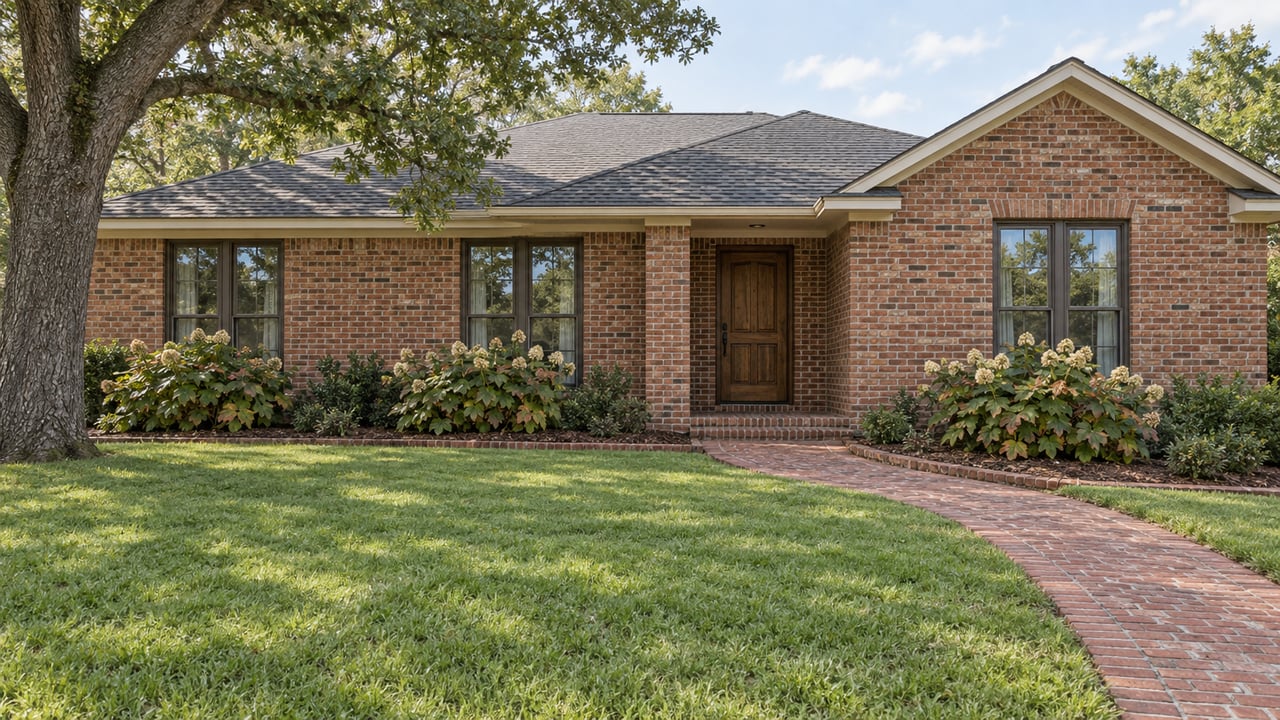
When you're looking at a house in Madison County and the listing shows last year's property tax, whose tax bill is that?
Usually it's the seller's, and in Mississippi it can be quite different from the bill you'll get. According to the Mississippi Department of Revenue, property taxes here are due by February 1 for property assessed the year before, and Madison County's tax collector says taxes are paid one year in arrears. That bill reflects the seller's assessment and the seller's exemptions for a year you didn't own the house.
This fall the local news has mostly focused on the county lowering its rate. That's real, and it's small. When you close, how you'll occupy the home, and which city and school district levy on it will move your bill much more.
The calendar is where buyers get caught
The homestead exemption is the biggest lever a Mississippi homeowner controls, and it runs on fixed dates. Under the Mississippi Department of Revenue's rules:
- You must own the home and live in it as your primary residence on January 1 of the tax year.
- Your deed must be filed with the Chancery Clerk before January 7.
- You file the application with the county Tax Assessor between January 1 and April 1. Madison County gives the same window.
- For the property to show up in your name on the next land roll, Madison County says the deed needs to be filed by December 31.
Today's date is October 5, 2026, so this matters right now. If you close before the end of the year and move in, you can meet the January 1, 2027 test, provided you then file by April 1. If you close in mid-January, you've missed that year's test. And if you meet the test but never file, you won't get the exemption.
That's why the seller's last bill doesn't predict yours. It was calculated for an owner who may have qualified for exemptions you won't have in your first year, or who may have qualified for none.
Closing costs are where this gets practical. Taxes are paid in arrears, so the year-of-sale bill is usually split between buyer and seller at closing. Madison County hasn't published guidance on how a seller's homestead credit is handled in that split. So ask your closing attorney or title company before you sign: which year's bill is the proration based on, and does that bill include the seller's exemption?
What occupancy and the exemption are worth
According to Mississippi State University Extension, Mississippi puts owner-occupied single-family residential property in Class I and assesses it at 10% of true value. Other real property falls in Class II and is assessed at 15%. The homestead exemption is a separate credit layered on top of the Class I ratio. On top of the lower ratio, homeowners under 65 get a credit on a sliding scale that tops out at $300. Half of it comes off school taxes and half off the county general fund. Homeowners 65 or older and those who are totally disabled get a larger exemption, and the Mississippi Department of Revenue says full exemptions for some veterans and surviving spouses expanded starting in 2026.
Here's what that looks like on the county levy alone, per $100,000 of true value at the new rate of 36.5 mills. One mill is one dollar per thousand dollars of assessed value.
| Per $100,000 of true value | Class I, owner-occupied single-family | Class II, other real property |
|---|---|---|
| Assessment ratio | 10% | 15% |
| Assessed value | $10,000 | $15,000 |
| County levy at 36.5 mills | $365.00 | $547.50 |
| Savings from this year's county cut | $16.30 | $24.45 |
On the county portion, the gap between the two columns is $182.50 per $100,000. That's more than eleven times the $16.30 the rate cut saves on a Class I home, and it's before any homestead credit or any city or school mills. This is an illustration of the county levy only. It isn't an estimate of any home's full bill, and it isn't tax advice.
Why the county cut its rate at all
The cut happened because of the state's rules, not as a decision to give homeowners a break.
In July, Tax Assessor Norman Cannady presented a preliminary 2026 tax roll that grew $1.2 billion, or 53.7%, to $3,504,899,033 in assessed value. In recent years the roll had grown about 2% to 7% a year. Cannady told Online Madison this year's jump is "primarily attributable to the addition of the initial Amazon Data Center improvements to the tax roll," and that a countywide reappraisal also contributed. County Administrator Greg Higginbotham said state law lets the county collect at most 10% of the increased value.
In September, Online Madison reported that a statutory requirement made the county look back 10 years and set a rate no higher than an aggregate rate levied during that period. The rate went from 38.13 mills to 36.5 mills, about $16.30 per $100,000 of home value, and supervisors unanimously approved a $213 million budget for 2027.
The reappraisal hit homes too. Class 1 and Class 2 real property, the classes that cover residential property, came to just under $2 billion, up nearly $505 million from last year. In July, Higginbotham said, "There's two sides to a tax bill — how much the property is worth and the tax rate," and cautioned that he would hesitate to say everyone's bill is going up. For any given house, the outcome depends on how much its own reappraised value moved compared with the lower rate. The rate cut alone doesn't settle that.
Two houses a few miles apart can carry different stacks
The county levy is one layer. City and school levies go on top, and the cities set their rates separately this budget season:
- Gluckstadt kept its rate at 12 mills on a 3–2 vote after a September 1 hearing. Aldermen John Taylor and Jessie Campbell had pushed for a two-mill increase. The $11.6 million budget took effect October 1.
- Ridgeland unanimously approved a 20.03-mill rate after an August 18 hearing. Its mayor said the proposed FY2027 budget wouldn't raise taxes.
- Madison the City kept last year's millage and adopted a general fund of just over $39 million, according to the Clarion Ledger.
- Madison County School District submitted a 2026–27 schedule of 49.55 mills for operations and 5.00 mills for debt service, 54.55 in total, the same as 2025–26. The district notes that it requests revenue dollars and county staff work out the mills needed, so treat that figure as the request, not a confirmed final levy.
Canton's September 1 agenda asked the city to levy enough to raise $30,829,285.59 for the Canton Public School District. The agenda doesn't state a millage. So for any address you're seriously considering, ask the Madison County Tax Collector for the total levy that applies to that parcel. Don't build it from headlines.
The Amazon money comes later, and it isn't settled yet
The Amazon value on the roll matters for the future too, not just this year's math. Amazon Web Services expects to build 17 data centers at the county megasite and 17 more off County Line Road in Ridgeland. Under the fee-in-lieu-of-taxes agreements, each building gets a 70% property tax break over its own 10-year term. Half of each year's revenue is set aside to repay a $215 million state infrastructure loan.
If the county's valuation holds, Ridgeland's first payment is projected at $5.4 million in 2028. By 2033, Ridgeland is projected to receive $14 million a year, the Madison County School District $38.3 million, and Canton Public Schools $38.6 million.
In August, AWS appealed the county's assessment of $292 million per building, arguing each should be valued near $70 million. Supervisors voted unanimously to uphold Cannady's valuation, and the dispute is expected to go to court. If AWS wins, those projected figures fall by about one-sixth. As of early October, there was no public report of how the appeal will be resolved. Future rate decisions by the county, Ridgeland, and both school districts will partly depend on that outcome. That's worth keeping in mind if you're planning to hold a home for ten years, but it doesn't make for a firm forecast.
Quick answers
Will my taxes go down because the county cut its rate? Only the county portion is lower, by about $16.30 per $100,000 for an owner-occupied Class I home. Your total also depends on your home's reappraised value and on the city and school levies.
I'm closing in December. Can I get homestead for 2027? If you own and occupy the home on January 1, your deed is filed before January 7, and you apply between January 1 and April 1, you meet the state's timing requirements.
What paperwork will the assessor want? Madison County's posted requirements and the Department of Revenue page both mention closing documents. However, Senate Bill 2882 says a closing statement can't be required as a qualification document. Call the Tax Assessor's office before you go so you know what to bring.
If you're comparing homes in Gluckstadt, Ridgeland, Madison, or Canton and want to work through the closing-date timing and parcel-level tax questions before you make an offer, Allison Bohon and the Harrowgate Realty Group team will go through the dates and numbers with you so your first tax bill isn't a surprise. Let's Connect.